
Back to top
Send SMS Send Inquiry
Polyol for ISF

Polyol for ISF

Product Details:

  • Density 1.08 Gram per cubic centimeter(g/cm3)
  • Ph Level 6.08.0
  • Poisonous NO
  • Appearance Clear to pale yellow liquid
  • Smell Mild characteristic
  • Product Type Polyol for ISF (Integral Skin Foam)
  • Molecular Formula (C3H6O)n
  • Click to View more
X

Polyol for ISF Product Specifications

  • Highly reactive, suitable for integral skin foam, good flow and cell structure, high flexural strength, excellent processing ability
  • 39072090
  • Used as a main component in the production of ISF polyurethanes
  • (RO)n
  • Varies depending on grade
  • Miscible with most organic solvents, insoluble in water
  • Polyether polyol, additives, stabilizers
  • >99%
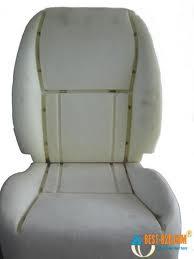
  • Integral skin foams for automobile, furniture, armrests, and shoe soles
  • 1.451.47
  • Liquid
  • NO
  • Clear to pale yellow liquid
  • 6.08.0
  • Industrial
  • Mild characteristic
  • Polyol for ISF (Integral Skin Foam)
  • (C3H6O)n
  • 1.08 Gram per cubic centimeter(g/cm3)
  • <0.2%
  • 28-56 mg KOH/g
  • 1200-2000 mPas at 25C
  • 200 kg drums or IBC totes
  • <0.05 mg KOH/g
  • >150C (Closed cup)

Product Description


ROYAL INDUSTRIES

Manuf. Of the Polyol Systems & Allied Products


TECHINICAL DATA SHEET


GEPEX-376-I Polyol

SUPRASEC-2030 Isocyanate


DESCRIPTION

Polyurethane foaming system, 100% CFC 11 free, for the production of semirigid integral skin foams with molded density of 300-600 g/l and skin hardness of 60-70 Shore A.

It is suitable to mold saddles for bicycle and items for furniture.


TYPICAL PROPERTIES


Unit

SUPRASEC -2030     

Isocyanate

GEPEX -276-I

Polyol

OH Number

mg KOH/g

----

156

0NCO content

%

28,5

----

Colour


dark brown

Black

Viscosity at 25 C/20C

mPa.s

125

780

Specific Gravity 25C/20C


1.210

1.050

Storage Temperature

C

15-25

15-25

Storage stability (1)

months

6

4

(1) Stored in the original sealed drums in a dry place at the recommended temperature


METERING RATIO

                                                                             Parts by weight

Recommended metering range Iso/Pol                          40/100 - 45/100      


REACTION CHARACTERISTICS   (at 20C component temperature)

Actual values vary depending on processing conditions.


Unit

Handmix

Low pressure

machine

High pressure

machine

Cream time

sec

17-23

14-20

10-16

Gel time

sec

38-48

35-45

30-40

Rise time

sec

47-57

42-52

37-47

Free rise density

Kg/m3

110-130

95-115

90-110


PROCESSING CONDITIONS

Polyol ingredients may separate in different layers, therefore each drum must be properly mixed before use. The moldability of the depends largely on the above operation. Molds must be treated with a proper release agent.


Components temperature                     C

Iso/Pol 20-25C

Molds temperature                                C

35-45

Demolding time                                   min

230


TYPICAL PHYSICAL PROPERTIES


Core*

Skin

Global


Density

Kg/m3

228

726

300


Tensile strength

Kg/cm2

11

70


DIN 53504

Tear strength

Kg/cm

2

13


DIN 53575

Elongation at break

%

130

140


DIN 53504

Hardness at 23C

ShoreA


65-70

ASTM D 2240

Compression Set (50%) 22h/79C

%


ASTM D 3574/86

C.L.D. (50%)

Kg/cm2


1.6

ASTM 2406/68


^ Core properties were tested according to ASTM 3574/86 norm.


FLAME CHARACTERISTIC : (Flame propagation and/or flame rates don't represent  

 the true hazard when the polymer is exposed to real fire

 condition.)


ACCORDING TO:       CSE RF4/83 class III

                                      MVSS 302


Please consult the Material Safety Data Sheets for detailed information on product safety handling and emergency procedures.


Date:     February2010


Trademark of the Royal Industries


Exceptional Performance for Polyurethane ISF

This polyol ensures highly reactive and reliable processing, resulting in integral skin foams with excellent flow, robust cell structure, and noteworthy flexural strength. The clear to pale yellow liquid formulation is ideal for automotive, furniture, and footwear industries, supporting demanding polyurethane applications with consistency and reliability.


Easy Handling and Versatile Packaging

Polyol for ISF is shipped in secure 200 kg drums or IBC totes, facilitating both large-scale manufacturing and smaller operations. Its mild smell and liquid physical form ensure convenience in storage and handling, while its miscibility with organic solvents allows for flexible formulation options in industrial polyurethane foam production.


Safety and Compliance in Use

With a flash point above 150C and extremely low acid and water content, our polyol for ISF is non-poisonous and safe for workshop environments. Its purity exceeds 99%, conforming to industrial standards and HS Code 39072090, making it suitable as a main component in high-quality, durable ISF polyurethanes.

FAQs of Polyol for ISF:


Q: How is this polyol used in the production of integral skin foam (ISF)?

A: This polyol serves as the main reactive component in ISF polyurethane systems, reacting with isocyanates to produce integral skin foams. It ensures structured foam expansion, good flow, and a durable skin layer, suitable for automotive, furniture, and footwear applications.

Q: What benefits does your polyol offer for ISF applications?

A: Our polyol delivers high flexural strength, consistent cell structure, superior flow properties, and excellent processing capability. Its high reactivity ensures reliable and efficient foam formation, resulting in long-lasting products with robust outer skins.

Q: When should this polyol be added during the ISF manufacturing process?

A: Polyol for ISF should be mixed with isocyanates and other formulation additives during the initial blending stage. Prompt and even mixing ensures optimal distribution, reactivity, and ultimately the desired foam structure.

Q: Where can this product be stored safely in the facility?

A: It should be stored in tightly sealed drums or IBC totes in a cool, dry, and well-ventilated area, away from direct sunlight and incompatible materials. The high flash point and non-poisonous nature support safe indoor storage.

Q: What is the process for applying polyol for ISF in foam production?

A: During polyurethane foam manufacturing, this polyol is blended with additives, catalysts, and isocyanate. The mixture is then poured or injected into molds. Its high reactivity promotes uniform cell formation and a resilient, flexible skin layer.

Q: How should I handle and dispose of this polyol safely?

A: During handling, use proper protective equipment and ensure good ventilation. Dispose of any polyol and empty containers in accordance with local regulations and environmental guidelines. Do not pour into water sources, as it is insoluble in water.

Q: What are the main advantages of using your polyol for automotive and furniture ISF?

A: For automotive and furniture ISF, our polyol offers excellent structural integrity, smooth surface finish, and enhanced durability. These properties make products like armrests and shoe soles both comfortable and long-lasting, elevating end-user satisfaction.

Tell us about your requirement
product

Price:

Quantity
Select Unit

  • 50
  • 100
  • 200
  • 250
  • 500
  • 1000+
Additional detail
Mobile number

Email

Other Products in 'Polyster Polyols' category


Factory Address

C-365, DSIDC Industrial Complex, Narela.

Royal Polyurethane (India) Private Limited
GST : 06AAHCR0562L1Z8
Plot No - 217, Sec-57, Kundli Industrial Estate,Kundli - 131028, Haryana, India
Phone :08045804153
Mr Vikas Garg (Proprietor )
Mobile :08045804153
Mr. Rajeev Kumar (For Chemical Inquiry)
Mobile :08045804153
Mr. R. C Chaudhry ( For Chair Handle Inquiry)
Mobile :08045804153
Paypal